Is Print-on-Demand Still Worth It in 2026? I’m Not Giving Up Just Yet.
AI can generate a thousand designs before I finish my coffee. But does that mean there’s no room left for independent artists like me?
Sometimes I wonder if I picked the worst possible time to be an independent artist.
Here I am, a 30-something millennial who’s been creating art and building little online businesses since 2016, trying to figure out how to sell my creativity in a world where technology is moving faster than I can keep up with.
And trust me, that’s saying something.
One minute, we’re learning how to create digital artwork.
The next, we’re opening Etsy shops, experimenting with print-on-demand, figuring out SEO, and trying to convince an algorithm that our designs deserve to be seen.
And now?
Artificial intelligence can generate hundreds of images in the time it takes me to finish designing one sweatshirt.
Wonderful.
Because apparently, being a small business owner wasn’t challenging enough already.
But here’s the thing.
I’m not against AI. I’m not giving up on print-on-demand. And I’m definitely not giving up on being an artist.
I’m just starting to wonder whether the way we approach selling art online needs to change.
But before we get into all that, let’s talk about what print-on-demand actually is.
For Starters, What Exactly Is Print-on-Demand?
If you’re unfamiliar with print-on-demand (or POD for short), here’s the simple explanation.
Print-on-demand is a business model that allows artists, photographers, designers, and other creatives to sell products featuring their artwork without having to purchase or store inventory themselves.
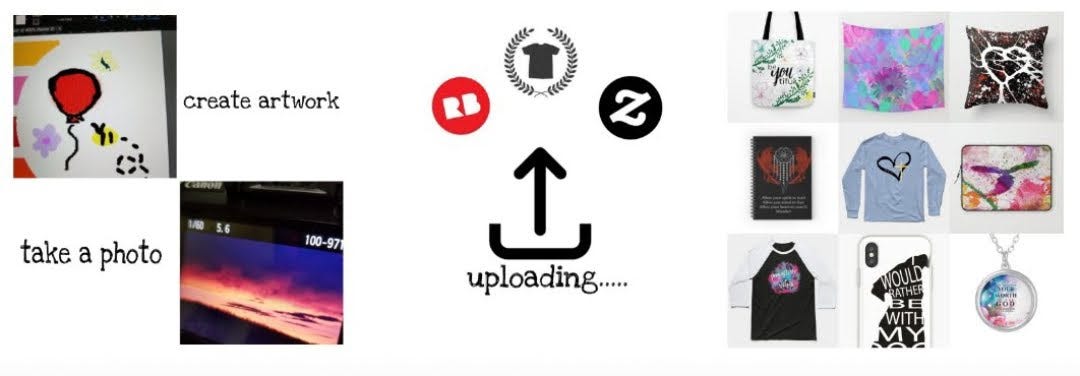
Basically, you create a design, upload it to a print-on-demand platform, and choose which products you want to sell it on.
Those products might include:
- T-shirts and sweatshirts
- Coffee mugs
- Tote bags
- Phone cases
- Stickers
- Posters and wall art
- Greeting cards
- Blankets and home accessories
When someone purchases one of your products, the print-on-demand company produces it, packages it, and typically ships it directly to the customer.
You don’t have to order 50 sweatshirts in advance and hope someone buys them.
You don’t have to turn your bedroom into a warehouse.
And you don’t have to personally package every order while wondering where on earth you’re supposed to store everything.
Sounds pretty convenient, right?
Platforms like Threadless, Zazzle, Printify, and Printful have made this type of business more accessible to independent artists like me, although each platform works a little differently.
And the money?
Well, that’s where things get interesting.
You don’t necessarily keep the entire selling price.
Depending on the platform, the base cost of the product, printing expenses, marketplace fees, and other charges are deducted, leaving you with a profit margin or artist earnings.
For example, if you sell a sweatshirt for $40 and the applicable production and platform costs total $30, you’re left with $10 before any other expenses or taxes.
So while print-on-demand eliminates the need to purchase inventory upfront, it doesn’t eliminate the costs of running a business.
Or the marketing.
Or the competition.
Or the hours spent creating designs that may or may not sell.
And despite what some online business gurus might tell you, uploading a cute design doesn’t mean you’re automatically going to wake up to hundreds of dollars in sales.
Trust me. I wish.
But that’s what originally attracted me to print-on-demand.
As a creative person who loves experimenting with artwork, photography, and digital designs, I liked the idea of turning my creations into real products without making a huge financial investment in inventory.
It gave me a way to experiment.
To build little collections.
To see my artwork on things people could actually use.
And to explore the possibility of earning income from something I genuinely enjoy doing.
But in 2026, with AI-generated designs becoming increasingly common and online marketplaces feeling more crowded than ever, I’ve started asking myself a question.
Is print-on-demand still a realistic opportunity for independent artists, or has it become another oversaturated side hustle?
And perhaps more importantly, is it still worth my time?
That’s where things get complicated.
Remember When Print-on-Demand Sounded Like the Perfect Side Hustle?
I remember how exciting the idea of print-on-demand sounded when I first started exploring it.
Create something you love.
Upload it to a website.
Choose a product.
And suddenly, your artwork can become a sweatshirt, greeting card, sticker, blanket, or piece of wall art.
No boxes of inventory.
No shipping orders yourself.
No spending hundreds of dollars on products that might never sell.
For someone like me, who loves experimenting with different creative projects, it sounded like a dream.
And in some ways, it still is.
I love seeing my little illustrations, photography, sarcastic reminders, and cozy animal characters become actual products.
There’s something special about taking an idea that started inside your head and turning it into something someone else can own.
But the part nobody really tells you?
Making the product is often easier than getting someone to actually find it.
You can spend hours designing, uploading, creating mockups, writing descriptions, and researching keywords.
Then you check your shop statistics.
Three views.
No sales.
And maybe one of those views was you checking whether the listing looked right.
Ah, yes.
The glamorous life of a small business owner.
Then AI Entered the Chat
I’ve watched the creative industry change so much over the years.
Traditional art became digital art.
Film photography evolved into digital photography.
Design software became more accessible.
The internet gave independent artists opportunities to sell their work without needing a physical storefront.
And now we’re experiencing another major shift with generative AI.
Some artists love it.
Some absolutely hate it.
And some are understandably worried about what it means for their careers.
Me?
I’m somewhere in the middle, although I lean toward embracing it.
I’ve never been afraid to admit that I use AI in my creative process.
I use it to brainstorm ideas, explore design concepts, organize projects, help with writing, troubleshoot technology, and experiment creatively.
I believe AI can be a useful tool for modern artists.
And I don’t believe that using AI automatically makes someone less creative.
But I also understand the concerns.
Because there’s a difference between using new technology to support your creative process and using it to flood online marketplaces with endless products without much thought behind them.
And when you’re a small artist trying to get noticed, that difference matters.
I Can’t Compete With a Machine That Never Needs Sleep
Let’s be realistic.
I work a regular job.
I have responsibilities.
I have pets who need attention.
I manage websites, create digital products, develop apps, write blog posts, and occasionally attempt to have something resembling a personal life.
And sometimes?
I’m exhausted.
There are days when I sit down to create something and realize I don’t have the energy to finish it.
Meanwhile, an AI image generator doesn’t need to finish a work shift before producing another design.
It doesn’t need a mental health day.
It doesn’t have bills to worry about.
It doesn’t get distracted because its cat decided to sit directly on the keyboard.
Although, honestly, that would be entertaining.
Trying to compete with AI based purely on how many images I can produce seems pretty pointless.
But maybe that’s where I’ve been thinking about things the wrong way.
Maybe I don’t need to create more than everyone else.
Maybe I need to focus on creating things that actually mean something to me.
Because I have something no machine has independently experienced.
My life.
My memories.
My interests.
My emotions.
My creative journey.
And the reasons I started making art in the first place.
AI can help me turn an idea into something visual.
But I’m still the person deciding what I want to express, what matters to me, and what belongs in my creative world.
And I think that distinction deserves more attention.
Can We Talk About Art Theft?
Here’s one of the parts of being an online artist that makes me nervous.
The possibility of someone stealing my work.
Because once you put something online, you can’t control every place it might end up.
Someone could repost your artwork without credit.
Copy one of your designs.
Trace something you’ve created.
Or try to sell something that looks suspiciously similar.
And now, with AI becoming more advanced, the conversation about copying, ownership, and originality feels even more complicated.
I don’t believe every AI-generated image is automatically stolen artwork.
But I also don’t think artists are wrong for questioning how training data is sourced, whether their work is being used without permission, or how their livelihoods might be affected.
Those are legitimate concerns.
And the legal and ethical questions aren’t all settled.
I can support AI as a creative tool while also believing artists deserve recognition, transparency, and fair treatment.
Those beliefs aren’t mutually exclusive.
As for protecting my own work?
I’m learning that saving my original files, photographs, sketches, drafts, and creative process is important.
Not because it guarantees nobody will copy me.
But because documenting my creative work helps preserve the story of how it came together.
And maybe that’s something artists should be talking about more.
Not just how to create faster.
But how to protect and value what we’re creating.
Maybe Being a Real Person Is Becoming More Important Than Ever
I’ve been thinking about this a lot lately.
With so much content being uploaded every single day, I wonder whether people are starting to crave something a little more personal.
Not just a cute design.
But a story.
A reason.
A connection.
Because here’s something I’ve noticed about the things I love buying.
Sometimes I’m drawn to a product because of the person who created it.
Maybe I love their artwork.
Maybe I relate to their story.
Maybe I appreciate the message behind what they make.
Or maybe I just love supporting a small creator who’s trying to build something meaningful.
That’s the kind of connection I want people to have with my work.
My artwork isn’t just random graphics I upload because a keyword is trending.
Some designs are inspired by my love for animals.
Some come from my sense of humor.
Some are reminders I need to hear myself.
Some are based on photographs I’ve taken.
And some come from my own experiences with mental health and learning to be kinder to myself.
My creative process can involve traditional artwork, digital design, photography, and AI-assisted tools.
I’m open about that.
But there’s still a person behind the decisions.
And I want people to know that person.
Not because I think my story makes every design automatically worth buying.
But because I believe creativity becomes more meaningful when we understand the ideas and experiences behind it.
Did Print-on-Demand Peak, or Did the Hype Just Wear Off?
Remember when everyone was talking about passive income?
Upload a few designs.
Put them on T-shirts.
Sit back.
Make money while you sleep.
Sounds wonderful.
Except they conveniently forgot to mention the marketing, competition, profit margins, platform fees, customer expectations, and the fact that you might make absolutely nothing for months.
Passive income?
Sometimes it feels more like passive disappointment.
I genuinely think print-on-demand is still useful.
But I’m not convinced it’s the magical money-making opportunity people once made it out to be.
The marketplace has become crowded.
AI has made it easier to produce designs quickly.
And simply uploading a product doesn’t guarantee anyone will discover it.
But here’s the distinction I’m starting to make.
Maybe print-on-demand didn’t peak. Maybe the hype surrounding easy print-on-demand income did.
And honestly?
Maybe that’s not such a bad thing.
Because print-on-demand was never supposed to be my entire creative identity.
It’s a way to manufacture products featuring my designs without keeping a warehouse in my house.
That’s useful whether I make ten sales or a thousand.
The business model itself doesn’t have to be the dream.
My creativity can be the dream.
I’m Building More Than Just Another Online Shop
If you’ve followed my creative journey for a while, you’ve probably noticed something.
I have a lot of interests.
And by a lot, I mean I occasionally wonder whether I need an assistant just to organize the projects I started myself.
I write.
I create artwork.
I take photographs.
I design self-care resources.
I build apps.
I manage blogs.
I experiment with digital products.
And yes, I sell print-on-demand merchandise through platforms like Threadless and Zazzle.
For a while, I wondered whether having so many creative interests was actually hurting my business.
Maybe I should focus on one thing.
One product.
One niche.
One platform.
One perfectly organized brand.
But lately I’ve started looking at it differently.
Maybe I don’t need every creative interest to become a separate business.
Maybe they’re all connected.
They’re different ways I express myself.
My website, Abby Juli Journal, can bring those pieces together.
My Substack lets me share the more personal side of my journey.
My artwork and photography give people a glimpse into what I create.
My digital products offer practical resources.
My apps let me explore creativity through technology.
And my print-on-demand shops give some of my designs a physical home.
They don’t all have to compete.
They can support each other.
And suddenly, the future of print-on-demand feels a little less intimidating.
Because if one shop struggles, that doesn’t mean my entire creative journey has failed.
It just means one part of it needs attention.
I Don’t Want to Become a Content Factory
This is probably the biggest realization I’ve had.
I’m tired of the constant pressure to produce more.
More designs.
More listings.
More blog posts.
More social media content.
More videos.
More products.
More everything.
When does it stop?
When do we get to enjoy the things we’re creating instead of constantly worrying about how to turn them into something profitable?
I’ve already experienced what happens when creativity starts feeling like another job.
And I don’t want to lose something that’s been such an important part of my life.
Art helped me express myself during some of my darkest moments.
Photography helped me reconnect with the world around me.
Writing gave me somewhere to put my thoughts.
And designing little characters and comforting reminders gives me a way to share some of that creativity with others.
I don’t want all of that to become a competition over who can upload the most products.
I want to create things because I believe in them.
Because they’re meaningful.
Because they’re funny.
Because they’re cute.
Or simply because I had an idea and wanted to see what happened.
Not every design needs to sell.
Not every creative idea needs to become a business opportunity.
And not every moment of my life needs to be productive.
Sometimes being an artist should just mean being allowed to create.
I’m Not Anti-AI. I’m Pro-Creativity.
Something that bothers me about the AI conversation is how quickly it becomes an argument between two sides.
Either you support AI and supposedly don’t care about artists.
Or you oppose AI and supposedly refuse to embrace technology.
But I don’t think it’s that simple.
I’m a modern artist.
I’ve watched technology change the tools available to creative people throughout my lifetime.
And I’ve adapted.
I’ve learned digital design.
I’ve experimented with new programs.
I’ve explored new creative mediums.
And now I’m learning how AI can fit into that process.
Does that mean I think every use of AI is ethical?
No.
Does it mean I believe AI should replace every human artist?
Absolutely not.
Does it mean I think artists should stop learning traditional skills?
Not at all.
I believe different creative methods can coexist.
I can appreciate the beauty of a hand-painted watercolor illustration while also appreciating what someone can create with digital tools.
I can value traditional photography while using modern editing software.
And I can use AI-assisted tools without pretending that every image I create was drawn entirely by hand.
To me, transparency matters.
So does creative intention.
So does respecting other artists.
I don’t think the answer is to stop making art because technology keeps changing.
I think the answer is to keep learning how to create responsibly in a changing world.
Maybe Success Isn’t About Outselling Everyone Else
I’ve spent a lot of time looking at my shop statistics.
Views.
Clicks.
Favorites.
Sales.
Or occasionally the complete absence of all four.
And it’s easy to start questioning yourself when the numbers aren’t moving.
Especially when you’ve spent hours creating something you genuinely love.
But I’m learning that online sales aren’t the only way to measure whether my creative work has value.
Sometimes success means finishing something I’m proud of.
Sometimes it’s trying a new medium.
Sometimes it’s making my first sale.
Sometimes it’s seeing someone connect with a little reminder I wrote.
And sometimes it’s simply knowing I haven’t abandoned something I love just because it became difficult.
Would I like my creative business to become more financially successful?
Of course.
I still have bills to pay.
I still have goals.
And I’d love for all this creativity to eventually provide more financial freedom.
But I also know that constantly comparing myself to artists with enormous followings and thousands of sales isn’t helping me enjoy my own journey.
I’m one person.
With a regular job.
Multiple creative interests.
A life outside the internet.
And only so many hours in a day.
I’m doing what I can with what I have.
And maybe that deserves a little more credit than I usually give myself.
So, Is Print-on-Demand Still Worth It in 2026?
For me?
Yes.
But not because I think I’m going to become rich uploading T-shirt designs.
Not because I expect every product to sell.
And definitely not because I think I can compete with an endless stream of automatically generated images.
It’s worth it because it gives me another way to share my creativity.
Because I love seeing my artwork on physical products.
Because I can experiment without buying hundreds of items upfront.
And because maybe, someday, someone will find one of my designs and love it enough to make it part of their everyday life.
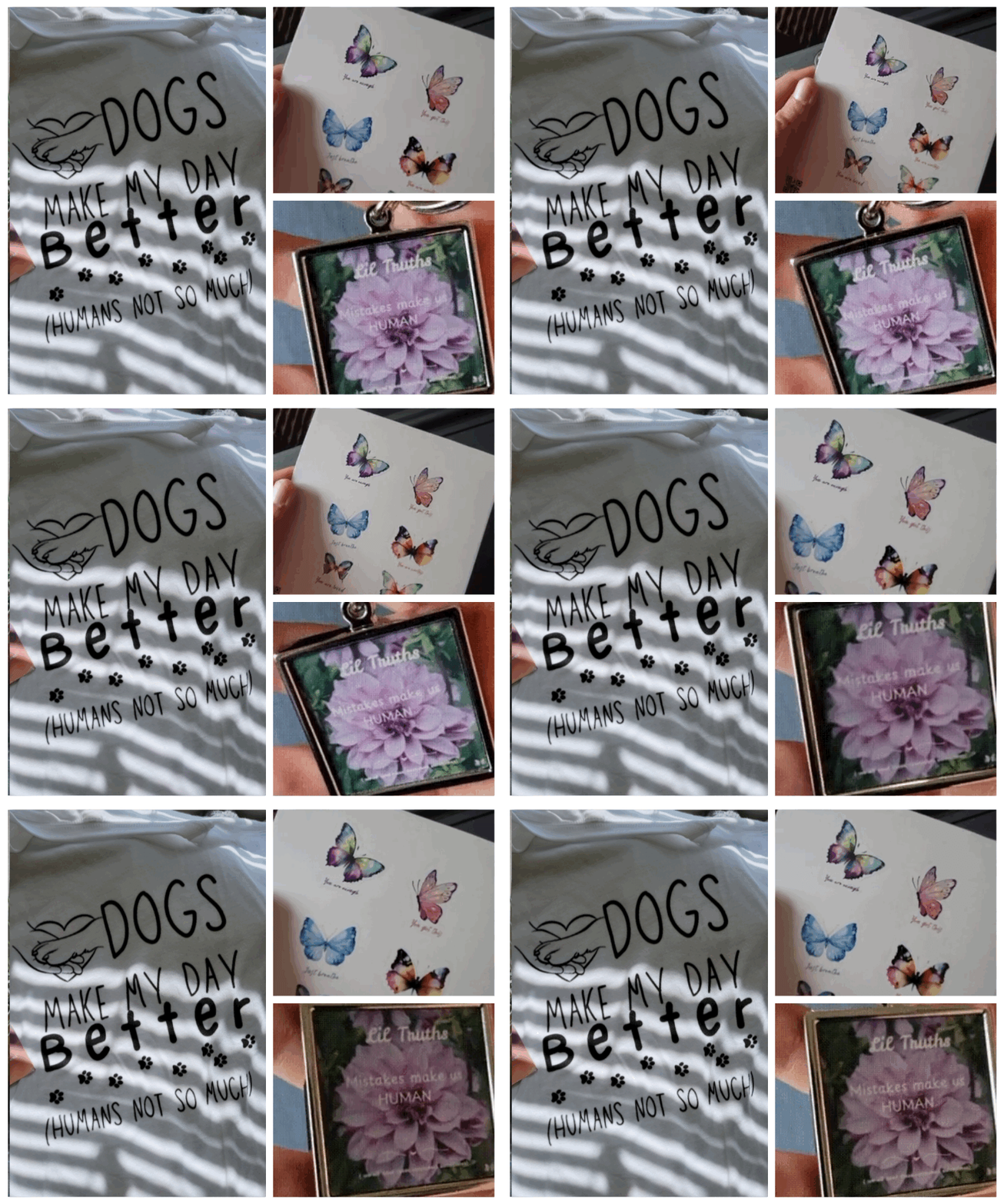
Maybe they’ll wear one of my sweatshirts.
Hang one of my photographs.
Use a notebook with one of my illustrations.
Or give someone a greeting card featuring artwork I created.
And maybe someday I’ll even walk into a store and see one of my own designs sitting on a shelf.
That’s still one of my little dreams.
It might happen.
It might not.
But I don’t think I should stop dreaming because the creative world is changing.
The World Can Keep Changing. I’m Going to Keep Creating.
Here’s what I’ve realized after nearly a decade of experimenting with creative businesses.
Something is always going to change.
A new platform.
A new trend.
A new algorithm.
A new technology.
A new way of selling artwork.
And there will always be someone who seems to be doing it faster, better, or more successfully than I am.
But I didn’t start creating because I wanted to compete with everyone.
I started because I loved art.
Because it helped me express myself.
Because it made me happy.
And because somewhere along the way, I realized that maybe the things I create could mean something to someone else, too.
AI isn’t going away.
Neither is online competition.
And unfortunately, neither are people who copy other people’s work.
But I don’t believe that means there’s no future for independent artists.
Maybe we just need to stop trying to win by producing the most.
Maybe we need to focus more on our stories.
Our ideas.
Our communities.
And the things that make our creative work meaningful to us.
I don’t need to create more than a machine. I need to keep creating things that feel like me.
So no.
I’m not giving up on print-on-demand.
I’m not giving up on being a modern artist.
And I’m not giving up on trying to build something meaningful from all these ideas running through my head.
I’m just learning how to change with the times without losing the reason I started.
And maybe that’s what being an artist in 2026 is really about.
Not resisting every new technology.
Not blindly accepting everything it brings.
But learning, adapting, questioning, experimenting, and continuing to create.
Even when the industry feels overwhelming.
Even when the numbers are disappointing.
Even when the future feels uncertain.
Because after all these years, there’s still one thing I know.
I was an artist before I opened an online shop, and I’ll still be an artist whether my next design sells or not.
With love,
Abby ♡
Still creating. Still experimenting. Still adapting to technology. Still doing my best-ish.
Let’s talk: If you’re an artist, designer, photographer, or small business owner, do you think print-on-demand is still worth pursuing in 2026?
How do you feel about AI becoming part of the creative industry?
And do you think there’s still room for independent artists in a marketplace filled with automatically generated designs?
I’m especially curious to hear from artists who embrace AI, artists who oppose it, and those of us who fall somewhere in between.
This reflection was adapted from my original article, Is Print-on-Demand Still Worth It in 2026? AI, Art Theft & Why I’m Not Giving Up, on Abby Juli Journal.
You can also explore my artwork and photography through my Threadless Artist Shop and Abby Juli Journal.
Discover more from 3AM and Still Figuring it Out
Subscribe to get the latest posts sent to your email.